There’s something I keep noticing with driven leaders the longer I do this work. Many leaders have been taught how to manage teams, solve problems, hold meetings, hit goals, and communicate expectations. They have been trained to lead strategy, projects, people, and change. But very few have ever been taught how to lead themselves.
And I don’t mean that in a polished, inspirational way. I mean in the real, messy, human moments when their nervous system is activated, their inner bully is loud, their need to be liked is running the meeting, or their fear of disappointing someone is making the decision for them.
I call this the leadership gap.
It’s the space between how capable someone looks on the outside and how supported they feel on the inside. It shows up in the leader who over-functions because it feels safer than trusting others. It shows up in the leader who says yes too quickly, then feels resentful later. It shows up in the leader who knows a hard conversation needs to happen, but keeps waiting for the “right time” because they are afraid of being misunderstood.
From the outside, this can look like dedication. It can look like excellence. It can even look like being a strong, reliable leader. But underneath, something else is often happening. The leader is not just managing the work. They are managing their own fear, pressure, self-doubt, and the quiet belief that they have to hold everything together.
The biggest leadership challenge is not always strategy, communication, or productivity. Sometimes it is the relationship a leader has with themselves.
After more than 30 years as a psychotherapist, executive coach, and facilitator, I have seen this again and again. The leaders who are the hardest on themselves are often the same leaders who care the most. They want to do it well. They want to get it right.
They want to be trusted, respected, and useful. So they push harder, give more, prepare more, explain more, and carry more than any one person was meant to carry.
But self-attack is not accountability. Over-functioning is not leadership. And abandoning yourself to keep everyone else comfortable is not courage.
At some point, every leader has to ask a deeper question: Am I leading from my values, or am I being led by my fear?
That question changes things.
Because when leaders begin to build a better relationship with themselves, they stop outsourcing their worth to performance. They become more honest about what they can and cannot carry. They become clearer about boundaries, repair, feedback, and trust. They are less reactive because they are less at war with themselves.
I know from my years of experience that inner work creates outer impact.
The way a leader treats themselves does not stay private. It enters the room. It shapes how they listen, how they respond, how they give feedback, how they make decisions, and how safe people feel telling the truth around them. A leader who has no room for their own humanity will often have a hard time making room for anyone else’s.
One of the lines I keep coming back to is this: The quality of your leadership will never exceed the quality of your relationship with yourself.
That is not a soft idea. It is a brave one. Because it asks us to stop pretending leadership is only about what we do outwardly and start paying attention to what is happening inwardly.
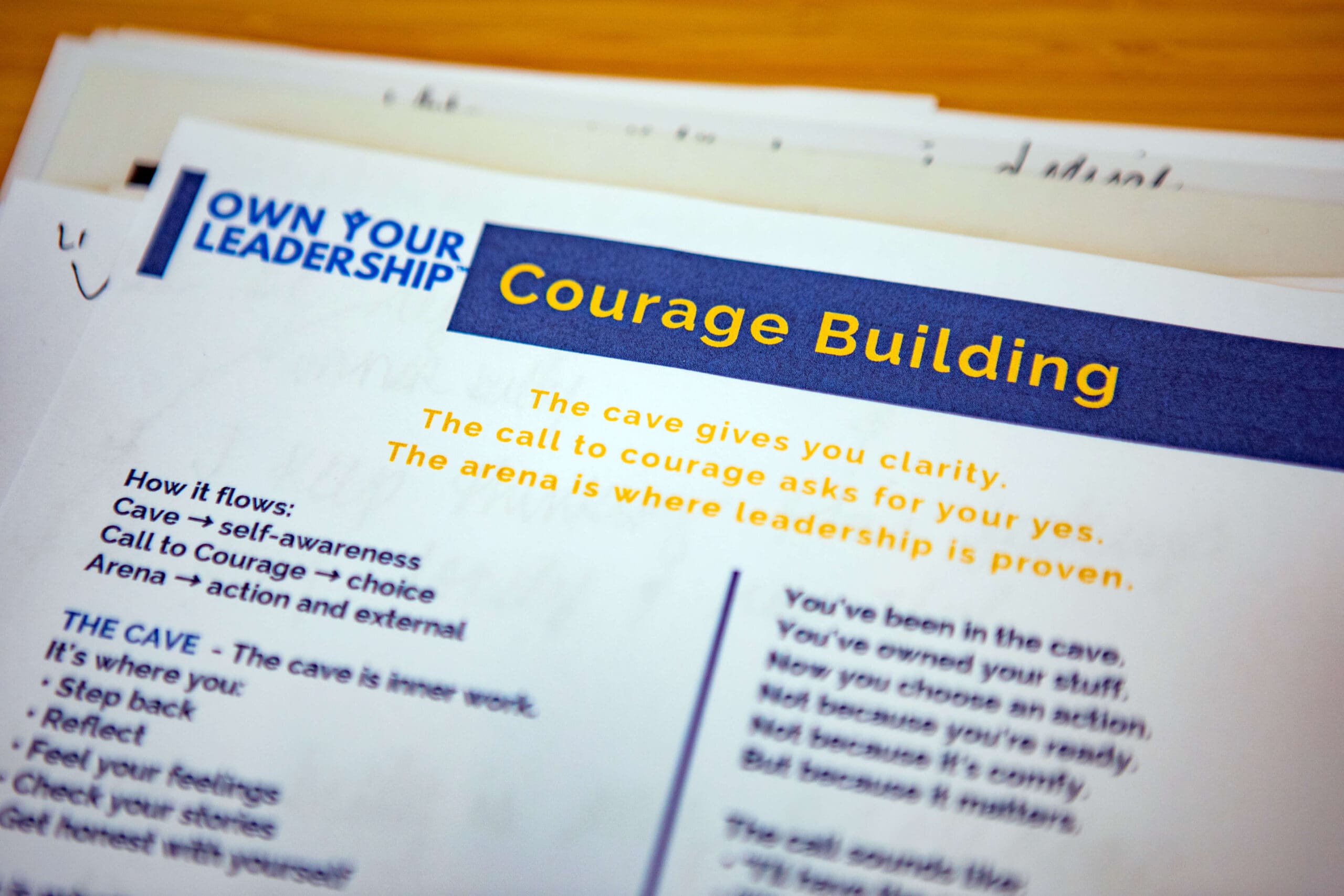
This is also one of the reasons I love the Dare to Lead™ framework so much. It gives leaders language, structure, and practice for this kind of work. Not just the work of leading others, but the work of staying connected to themselves while they do it
Courageous leadership is not about becoming untouchable; it is about becoming more honest, more grounded, and more willing to choose your values when fear, shame, pressure, or self-protection would otherwise take over.
If this feels familiar, if you are a high-performing leader who has been carrying too much, questioning yourself quietly, or realizing that your inner world is asking for a different kind of attention; this is exactly the kind of work we will be practicing in our August training.
I am leading a four-day Dare to Lead™ program in the Bay Area, August 27–30. It is twenty hours of practice-based work on the skills that make brave leadership possible: self-awareness, values, trust, vulnerability, resilience, feedback, and the kind of courageous conversations that begin on the inside before they ever happen in the room.
If this is the year you want to lead with more clarity, courage, and self-trust, I would love to have you with us.
Details and registration are at ownyourleadership.org.

